
CBAM for importers
Key Takeaways
- Since 1 January 2026 CBAM is in its definitive phase: above 50 tonnes of iron and steel, cement, fertilisers or aluminium per calendar year, only an authorised CBAM declarant may import.
- The 50-tonne threshold is cumulative per calendar year and per importer, not per shipment or supplier.
- Where an importer is not established in the EU, the CBAM authorisation obligation shifts to the indirect customs representative, in practice the customs broker.
- Authorisation as a CBAM declarant runs through the EU CBAM register and has a decision period of up to 120 days.
- An AEO authorisation is not a CBAM authorisation: they are separate schemes handled by different authorities.
Since 1 January 2026 CBAM has been in its definitive phase. If you import more than 50 tonnes of iron and steel, cement, fertilisers or aluminium per calendar year, that is only permitted as an authorised CBAM declarant, and from import year 2026 onwards you must file an annual declaration on the embedded CO2 emissions of those goods.
The reporting period in which mistakes carried no consequences is over. What follows are certificates you have to buy and penalties running to three to five times the standard amount per certificate.
There is one point explained in almost no article that is the most decisive for Dutch importers and their brokers: where an importer is not established in the EU, the CBAM obligation shifts to the indirect customs representative. In practice that is the customs broker.
In this article we explain which goods CBAM applies to, how the 50 tonne threshold works, who must apply for authorisation, when you file a declaration and what happens if you import without authorisation.
Which goods does CBAM apply to?
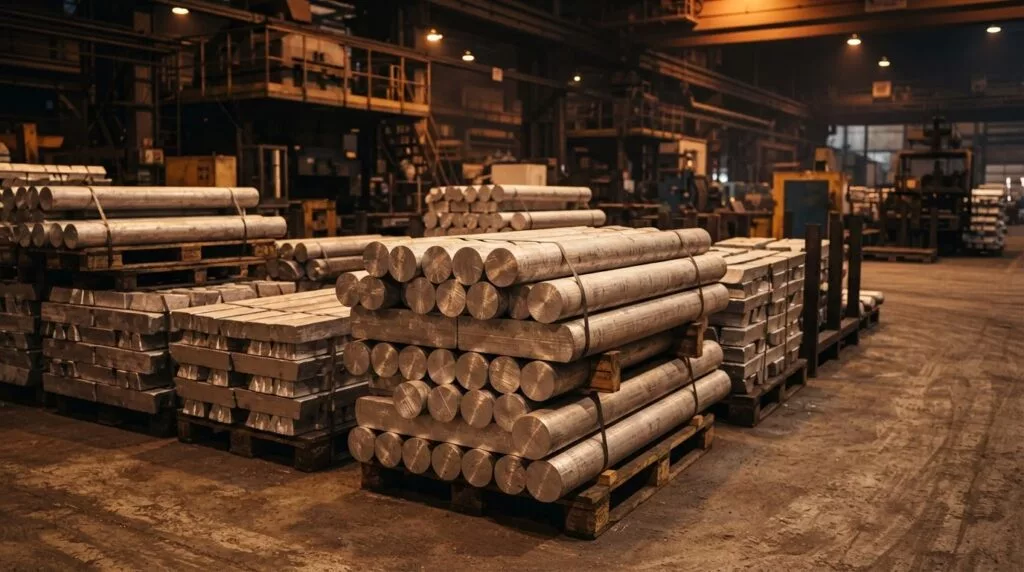
CBAM applies to the import of goods in the categories iron and steel, cement, fertilisers, aluminium, electricity and hydrogen.
Whether something is a CBAM good is not determined by the sector you operate in but by the CN code of the good. That is an important difference. A machine part made of steel can fall under CBAM while you would not call yourself a steel importer, and a product you consider steel may fall outside it.
The practical first step is therefore not a policy question but a classification question: have the commodity codes of your entire import portfolio checked against the CBAM list. Companies that have not done this usually find out through a rejected declaration, by which time the shipment has already arrived.
Note that supervision here does not sit with Customs but with the Dutch Emissions Authority. That is a different body with its own register, its own deadlines and its own sanctions.
How does the 50 tonne threshold work?
For CBAM goods, with the exception of hydrogen and electricity, a threshold of 50 tonnes per importer per calendar year applies. For hydrogen and electricity there is no threshold.
The threshold is measured against the total net weight of imported CBAM goods as stated in the customs declaration. Not against the value, not per shipment and not per supplier, but cumulatively across the whole calendar year.
There is a misunderstanding here that can cost a lot of money. The 50 tonnes is not an exemption for the first 50 tonnes. The moment you cross it, the obligation applies to all your imports for that year, including the tonnes you brought in during January when you still thought you would stay below it.
That makes tracking your running annual total an operational task rather than a year-end exercise. If you sit structurally around the threshold, the safe choice is to apply for authorisation before you cross it.
Who must apply for authorisation as a CBAM declarant?
From 2026, importing CBAM goods above the threshold is only permitted by authorised CBAM declarants. You apply for authorisation through the EU CBAM register, using eHerkenning. The decision period is a maximum of 120 days.
Who that applicant is depends on where the importer is established.
- If you are established in the EU as an importer, you apply for the authorisation yourself
- If you are not established in the EU, the obligation moves to your indirect customs representative
That second case deserves attention, because it changes the relationship with your broker. The indirect representative then becomes the authorised CBAM declarant themselves and carries the liability for the declaration and the certificates.
No broker takes on that position lightly. Expect to be asked for verified emissions data, for responsibilities to be recorded in the contract, and possibly for security. A broker who does not ask those questions is not being easy-going, they are unprepared.
Important to know: an AEO licence is not a CBAM authorisation. They are separate schemes at different bodies, and one does not exempt you from the other.
When must you file a declaration?
An authorised CBAM declarant who has imported more than 50 tonnes of CBAM goods within a calendar year files a CBAM declaration. The deadline is 30 September of the following year.
For import year 2026 that means a first declaration by 30 September 2027 at the latest. The sale of CBAM certificates starts in 2027, for the emissions of the goods you imported in 2026.
That seems far away and it is not. The declaration covers the embedded emissions of the goods, and that data has to come from your supplier. Anyone who starts requesting emissions data in September 2027 for deliveries from early 2026 will not get there.
The practical task therefore does not sit in the declaration but in the data chain before it: which producer, which installation, which emissions per tonne, and who verifies it. With suppliers in third countries who are not used to this, that is a conversation of months and not an email request.
What happens if you import without authorisation?
If you import above the threshold without authorisation, a penalty follows. That penalty amounts to three to five times the standard amount of 100 euro per CBAM certificate, plus indexation.
Because the number of certificates follows from the embedded emissions of the goods, the penalty scales with your volume. On a few hundred tonnes of steel that quickly runs up to an amount out of all proportion to the effort of applying.
There is one mitigation. Where the threshold is exceeded by a small margin, less than ten percent, the penalty can be lower. That is intended for the company that just crosses 50 tonnes and not for anyone structurally ignoring the scheme.
A transitional arrangement applied for those who applied in time: applicants who had submitted an authorisation request by 31 March 2026 were allowed to keep importing CBAM goods while awaiting the decision. That date has now passed. If you have no application running and you import above the threshold, have your position checked with the Dutch Emissions Authority before booking another shipment.
What else changes in the coming years?

CBAM does not stand on its own. It is the mirror of the European emissions trading system: as European producers receive fewer free emission allowances, the CBAM charge on imported goods gets heavier.
Free allocation within the ETS is being phased out annually from 2026. From 2034 the free allocation for the production of CBAM goods disappears entirely.
For importers that means a cost item that rises step by step over the coming years and that differs per country of origin. A supplier in a country with its own carbon price can ultimately work out cheaper than one without, even if the purchase price per tonne is higher.
That makes CBAM a purchasing question in the longer run and not only a compliance question. Anyone who already knows the embedded emissions per supplier can make that trade-off. Anyone who does not will discover it at the first settlement.
Expert support with CBAM and customs declarations
CBAM touches three processes at once: your goods classification, your customs declaration and your supplier data. The CN code determines whether you fall under it, the customs declaration determines your annual total in tonnes, and your supplier determines whether you have the emissions data in time.
For importers not established in the EU there is the added question of who acts as indirect customs representative, and on what terms that party is willing to carry the liability.
The Customs Company is an AEO-certified customs service provider in the Netherlands with direct connections to Dutch Customs and Portbase.
We check which of your commodity codes fall under CBAM, track your annual total in tonnes from the import declarations, and discuss in advance what representation means for the division of responsibilities.
Frequently asked questions
Q: Which goods does CBAM apply to?
Ans: Iron and steel, cement, fertilisers, aluminium, electricity and hydrogen. Whether a specific product falls under it is determined by the CN code and not by the industry you work in. Have your full code list checked rather than relying on the product description.
Q: Does the 50 tonne threshold apply per shipment or per year?
Ans: Per importer per calendar year, measured against the total net weight as stated in the customs declarations. Once you cross that threshold the obligation applies to all your imports for that year, including retroactively for the shipments before it. For hydrogen and electricity there is no threshold.
Q: I am not established in the EU. Who applies for the authorisation?
Ans: The obligation moves to your indirect customs representative, in practice your customs broker. That party then becomes the authorised CBAM declarant and carries the liability. Discuss this in advance, because no broker takes on that position without agreements on emissions data and responsibilities.
Q: I have an AEO licence. Do I still need a CBAM authorisation?
Ans: Yes. An AEO licence is a customs licence issued by Customs, a CBAM authorisation is a separate authorisation from the Dutch Emissions Authority. One does not exempt you from the other, even though the underlying assessment of your records is comparable.
Q: When must I file my first CBAM declaration?
Ans: For import year 2026 by 30 September 2027, and after that on 30 September of the year following each import year. The sale of CBAM certificates starts in 2027 for the emissions of goods imported in 2026. Start collecting emissions data from your suppliers well before that date.