
Incoterm DPU Explained: Delivery at Place Unloaded and Seller Responsibilities
For most Incoterms, the seller’s responsibility ends when the goods arrive at the destination, ready for unloading. The Incoterm DPU goes one step further.
Under DPU, the seller must also physically unload the goods at the agreed destination. DPU stands for Delivered at Place Unloaded and is part of the Incoterms 2020 rules published by the International Chamber of Commerce (ICC).
Under DPU, the seller arranges and pays for the entire transport to the agreed destination and unloads the goods there. Risk transfers to the buyer only after unloading has been fully completed. This makes DPU the Incoterm under which the seller carries the greatest physical responsibility.
In this article, we explain what DPU means, what the seller is responsible for, how DPU compares to DAP and DDP, and when Incoterm DPU is the right choice for your shipment.
What is the Incoterm DPU?

DPU stands for Delivered at Place Unloaded. It is one of the 11 trade rules within Incoterms 2020, published by the International Chamber of Commerce (ICC).
In the Netherlands, DPU is known as “Geleverd ter Bestemming en Gelost.” DPU replaced DAT (Delivered at Terminal) in Incoterms 2020 and was expanded so that it applies to any place of destination, not just terminals.
Under Incoterm DPU, the seller arranges and pays for the entire transport to the agreed destination. In addition, the seller handles all export formalities and export documents. DPU can be used for all forms of transportation, including road, rail, air, and sea freight, making this Incoterm suitable for multimodal shipments.
The agreed destination may vary. It can be a terminal, port, airport, distribution center, or the buyer’s own premises. Before agreeing to DPU, the seller must verify that unloading at the agreed location is actually possible.
If unloading is not possible, DAP is the more suitable Incoterm. Always clearly specify the exact point within the agreed destination in the sales contract.
For example, a Dutch exporter shipping to Russia may specify:
DPU Novy Arbat Street 239, Moscow, Russia, Incoterms 2020.
The Feature That Makes DPU Unique: The Seller Unloads the Goods

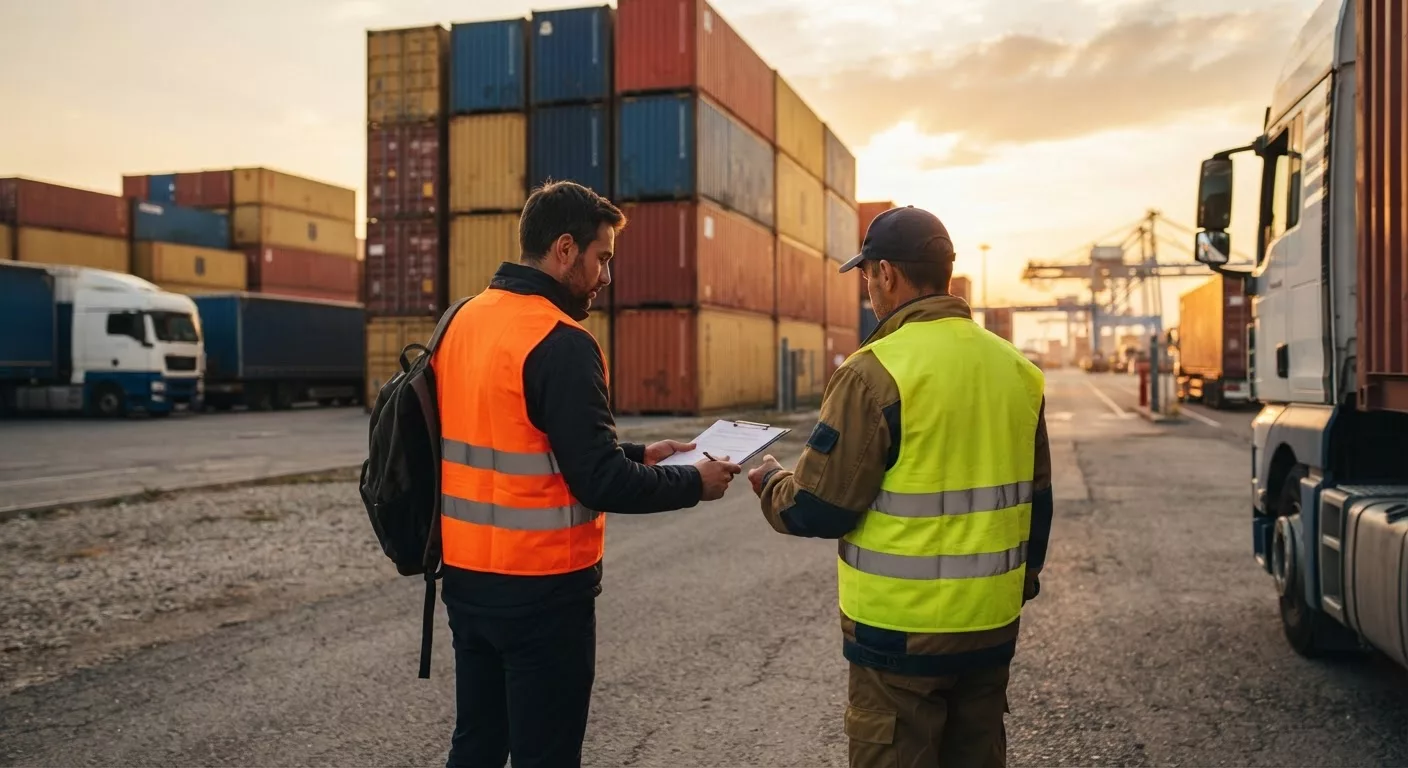
DPU is the only trade rule within the entire Incoterms 2020 framework where the seller is obligated to unload the goods at the place of destination. This is expressly confirmed by the ICC. Under every other Incoterm, responsibility for unloading at the destination lies with the buyer.
Under DPU, the seller must arrange unloading at the agreed destination at their own risk and expense. The seller must ensure that the appropriate equipment is available, such as cranes, forklifts, or other handling equipment.
For specialized goods such as heavy machinery, the seller is responsible for providing the necessary handling capacity.
Risk transfers to the buyer only after unloading has been fully completed. This is a later moment of risk transfer than under DAP, where risk transfers when the goods are ready for unloading, but before actual unloading takes place.
The seller bears the risk of loss or damage throughout the entire transport journey and during the unloading process itself.
Responsibilities of the Seller and Buyer Under DPU
Under DPU, the seller assumes more physical responsibility than under any other Incoterm, with the exception of DDP. The buyer has very limited obligations. A clear understanding of these DPU responsibilities before signing a contract helps prevent costly surprises for both parties.
| Responsibility | Seller | Buyer |
|---|---|---|
| Export packaging and marking | ✅ | ❌ |
| Export customs clearance and permits | ✅ | ❌ |
| Arrange and pay for full transport to destination | ✅ | ❌ |
| Unload goods at the agreed destination | ✅ | ❌ |
| Provide transport document to the buyer | ✅ | ❌ |
| Inform the buyer once goods are unloaded and available | ✅ | ❌ |
| Insurance during transport and unloading | Optional | Optional |
| Import customs clearance and import duties | ❌ | ✅ |
| Transportation beyond the agreed destination | ❌ | ✅ |
The seller bears all costs and risks from the point of origin through to the completion of unloading at the agreed destination.
Risk transfers to the buyer only after the seller has unloaded the goods and informed the buyer that they are available. The seller must also provide all documents the buyer needs to take possession of the goods.
The buyer becomes responsible from the moment the goods are unloaded and available at the agreed destination. This includes import customs clearance, import duties, and any onward transportation to the final location.
Neither party is obligated to arrange insurance under DPU, but the seller is strongly advised to insure the goods since they bear the risk through to the completion of unloading.
What Should the Seller Check Before Agreeing to DPU?

DPU creates practical obligations that go beyond paperwork and transportation contracts. Because the seller is responsible for unloading at the destination, they must assess in advance whether unloading at the agreed location is actually possible.
If this is misjudged, it can lead to delays, damage to goods, safety incidents, and unexpected costs. Sellers who cannot guarantee unloading at the agreed destination should choose DAP instead.
The seller should verify the following before agreeing to DPU:
- Access to the location: Can the transport vehicle reach the agreed unloading point without restrictions?
- Availability of equipment: Are the necessary cranes, forklifts, or pallet trucks available at the destination?
- Safety conditions: Are there labor or safety requirements at the destination that the seller’s team must comply with?
- Scheduling: Is there an agreed unloading time slot and are penalty clauses applicable in case of delays?
- Insurance coverage: Does the seller’s transport insurance remain valid until unloading has been completed?
- Contract clarity: Is the exact delivery point clearly described in the sales contract? Vague descriptions such as “construction site” are not sufficient.
DPU Compared with DAP and DDP

DPU is most often compared with DAP and DDP because under all three rules the seller arranges and pays for transport to the agreed destination. Understanding the key differences helps you choose the right Incoterm and avoid unexpected obligations and costs.
DPU vs. DAP: Who Unloads the Goods?
DPU and DAP are almost identical in structure. Under both arrangements, the seller arranges and pays for transportation to the agreed destination. The only difference is unloading.
Under DPU, the seller is responsible for unloading the goods at the agreed destination at their own risk and expense. Under DAP, the seller delivers the goods ready for unloading, but the buyer performs the actual unloading.
The moment of risk transfer also differs. Under DPU, risk transfers after unloading has been fully completed. Under DAP, risk transfers when the goods are ready for unloading, before the actual unloading takes place.
If the seller cannot guarantee unloading at the agreed location, DAP is the safer and more practical choice.
DPU vs. DDP: Who Handles Import Customs?
Under both DPU and DDP, the seller must unload the goods at the agreed destination. The key difference lies in import customs clearance.
Under DPU, the buyer handles all import customs formalities and pays all import duties and taxes.
Under DDP, the seller handles import customs clearance and pays all import duties, taxes, and VAT in the country of destination.
DDP places the maximum obligation on the seller, including acting as the importer of record in the destination country. If the seller does not wish to handle foreign import formalities, DPU is the more practical choice.
DPU and Letters of Credit: What You Need to Know

DPU transactions are largely incompatible with the common payment method of a Letter of Credit. Under a standard Letter of Credit, the bank requires the seller to present transport documents, such as a Bill of Lading, as proof of delivery.
Under DPU, delivery only takes place after unloading at the destination, making it very difficult for the seller to submit the required documents to the bank in time for payment.
In practice, DPU works better with other payment methods, such as open account, documentary collection, or advance payment.
If payment via Letter of Credit is required, DAP or CPT are more suitable choices because the seller can obtain and present transport documents at an earlier stage.
Always agree on the payment method with your buyer before including DPU terms in the sales contract.
When Should You Use the Incoterm DPU?
DPU is not the right choice for every seller or every shipment. It works best when the seller is able to arrange unloading at the destination and is confident that site conditions allow it.
DPU is a good choice for construction or energy projects where the seller also supervises installation or assembly at the destination.
It also works well for consolidated containers with multiple consignees because the seller can separate the shipment after unloading and make the goods available to each consignee individually. Buyers who do not have the equipment or expertise to unload safely also benefit from DPU.
DPU is not suitable when the seller cannot verify that unloading at the agreed destination is possible. In that case, choose DAP.
It is also not the right choice when the buyer wants the seller to handle import customs clearance and import duties. In that situation, DDP is the appropriate option. If payment through a Letter of Credit is required, avoid DPU and choose DAP or CPT.
DPU Shipment from the Netherlands? Leave Customs to the Experts
Under DPU, the seller is already responsible for transportation, unloading, and everything in between. Adding export customs errors on top of that can create serious problems.
For Dutch exporters, all customs declarations, permits, and pre-shipment inspections must be handled correctly before the goods leave the Netherlands.
The Customs Company is an AEO-certified customs service provider in the Netherlands with direct connections to Dutch Customs and Portbase.
With 24/7 support, they ensure that your DPU export customs clearance is handled correctly, allowing your shipment to reach its destination without delays, even before unloading begins.
Frequently Asked Questions
1. What makes DPU different from DAP?
Ans: Under DPU, the seller is responsible for unloading the goods at the agreed destination. Under DAP, the buyer handles unloading. Risk also transfers later under DPU, only after unloading has been fully completed.
2. Is DPU suitable for all modes of transport?
Ans: Yes. DPU can be used for all forms of transportation, including road, rail, air, and sea freight. It is also suitable for multimodal shipments involving more than one mode of transport.
3. Can DPU be used with a Letter of Credit?
Ans: DPU is largely incompatible with standard Letter of Credit payments. Delivery only takes place after unloading at the destination, making it very difficult for the seller to provide the required documents to the bank in time.