
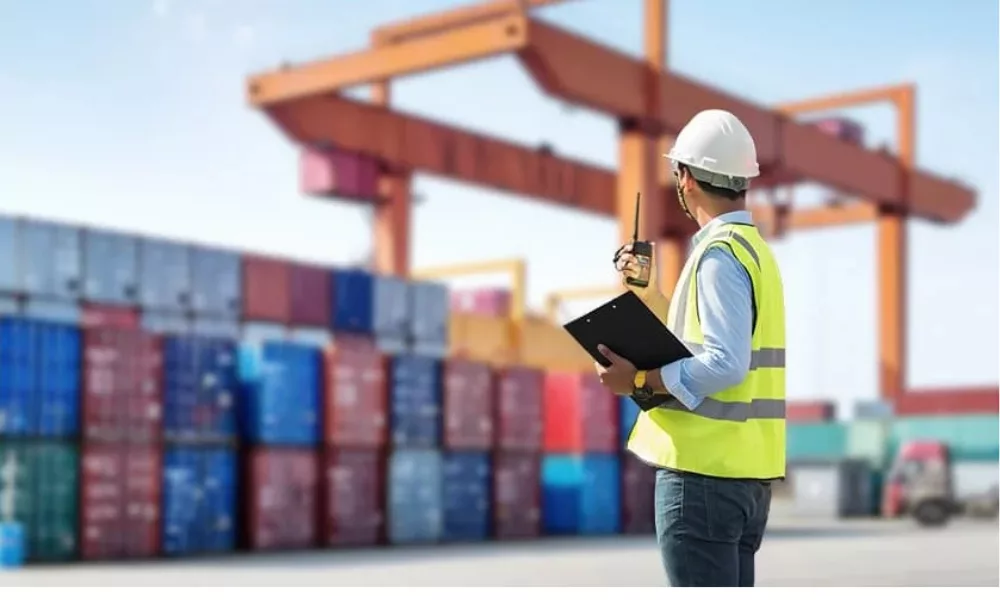
When goods enter or leave a country legally, they must pass through customs. This process of customs clearance ensures that the government checks that the shipment complies with all applicable regulations and that the proper taxes and import duties have been paid.
Once a shipment successfully completes this customs clearance process, the shipment is given customs clearance status.
In this blog, we explain how customs clearance works within the European Union and for shipments from outside the EU. We also discuss import duties and the documents required for customs clearance.
What is customs clearance?
Customs clearance is the process of completing all required customs formalities so that goods can legally enter or leave a country. When shipments comply with national and international trade regulations, they are released for distribution, storage or export.
If you transport goods between countries within the European Union, no customs clearance formalities are required. However, when you import from outside the EU, you must go through a formal customs clearance process.
During the customs clearance process, the importer is responsible for paying any import duties, VAT and other government taxes. After that, the shipment is officially released.
What documents are required for customs clearance?
This section is intended for EU importers. Below is an overview of the main documents required for customs clearance when importing goods into the European Union.
Below is the list of important documents:
- Single Administrative Document (SAD).
- Economic Operator Registration and Identification (EORI) number.
- Proof of origin
- 1 / EUR-MED certificate
- Invoice Statement
- Trade Invoice
- Bill of Lading (BL) or transport document.
- Entry Summary Declaration (ENS).
Having all these required documents available will help you navigate the customs clearance process smoothly. Proper documentation helps avoid delays, fines or additional costs when importing into the European Union.
Customs clearance fees: EU vs. non-EU shipments
Customs clearance fees apply when goods are imported into the Netherlands from a country outside the European Union. For example, if your shipment comes from China or the United States, you will be subject to import duties.
However, customs clearance is not required when goods are transported between European countries, as the EU operates as a single customs union. This means internal trade takes place without formal border controls.
Shipments to and from non-EU European countries such as Norway, Switzerland and the United Kingdom do require a customs declaration.
Customs clearance fees typically depend on:
- The type and value of the goods
- Import duties
- Value-added tax (VAT)
- Excise
- Cost of customs declaration
General customs clearance process for imports to the Netherlands
When companies import goods into the Netherlands, they must follow a structured process to comply with applicable customs regulations. Dutch Customs oversees the entire import procedure. On the official website of Customs you can find detailed information about import duties, forms and procedures.
Below is the general customs clearance process you should follow when importing goods to the Netherlands:
Step 1: Customs declaration
Filing an import declaration through the automated declaration system (AGS) is the first formal step when goods arrive in the Netherlands. With this declaration, you provide Customs with information about the shipment, value, country of origin and product classification.
You will need the following documents:
- Commercial invoice
- Bill of lading or waybill
- Packing List
Check all information carefully before filing the declaration. Use the correct HS code and include the correct customs value. Include complete and accurate documents. Minor errors may result in delays, additional fees or audits.
Step 2: Import duties and VAT
To calculate import duties, first determine the correct HS code for your product and check the applicable rate in the EU TARIC database. The TARIC tool displays import duties based on product classification and country of origin.
VAT on imports depends on the type of goods and customs value. The VAT rate is calculated on the total value, including import duties and transportation costs.
- Standard VAT rate:21% applies to most goods imported into the Netherlands.
- Reduced VAT rate:9% applies to food, medicines, books and certain essential products.
Step 3: Additional non-financial requirements.
Importing goods is not just limited to paying import duties and VAT. You must also comply with product-specific regulations on health, safety, labeling and environmental standards. These requirements depend on the type of product and its intended use.
To check applicable regulations, use the European Commission’s Access2Markets portal. This platform provides detailed information on import formalities, rules of origin, product standards and trade measures for goods entering the European Union.
Always check in advance if your product requires special certifications, permits or compliance documents before shipping.
Step 4: Inspection and release
Dutch Customs may select your shipment for inspection based on risk analysis, product type or accuracy of documentation. When you submit complete and correct documentation, normal processing time is usually 1 to 3 business days.
Step 5: Release of goods
Once Dutch Customs has approved the declaration and confirmed the payment of import duties and VAT, the goods are cleared for further handling. At that point, the goods officially enter free circulation within the European Union.
You can then arrange transportation to the warehouse, distribution center or end customer. Proper coordination with your carrier ensures timely delivery and avoids unnecessary storage or handling costs.
How do you choose a customs clearance partner?

If you want your shipment to move smoothly through all cross-border processes, it is important to carefully choose an experienced and AEO-certified customs specialist.
Companies are well advised to carefully assess both the expertise and operational capabilities of a customs service provider before making a decision.
You can consider the following factors when evaluating a customs partner:
- Direct and indirect representation:Do they offer both options and can they advise when each structure is best suited for your business model?
- HS code classification and verification of origin:How do they verify tariff codes, proof of origin and customs value calculations before filing a declaration?
- ICS2 compliance and data accuracy:How is safety and security data processed according to ICS2 requirements and who takes responsibity for data quality?
- Pre-departure documentation verification:What minimum documentation is required before shipment departure to avoid border delays or customs inspections?
Customs clearance is a time-consuming process and also requires proper documentation. The Customs Company offers AEO-certified customs services, direct links to Portbase and Dutch Customs, and is available 24/7.
We provide full documentation and handle customs clearances quickly and efficiently, keeping your supply chain running smoothly.
Conclusion
Customs clearance in the Netherlands requires careful preparation and accurate documentation. Importers must file a correct customs declaration, calculate import duties and VAT correctly and comply with applicable product regulations.
If you are looking for a professional and AEO-certified customs service provider, you can find The Customs Company Consider. We offer direct links to Portbase and Dutch Customs, 24/7 support and efficient handling of declarations to keep your import shipments flowing without delays.