
Inward and outward processing: when do you pay no import duty on your own goods?
Key points
- Inward processing suspends import duty on non-Union goods that you process inside the EU and then export again.
- Outward processing is the mirror image: you send Union goods out temporarily for processing or repair and on return you pay only on the processing.
- Both require an authorisation from customs, a guarantee and stock records that account for every item.
- You discharge the procedure within the discharge period. Let it expire without discharge and a customs debt arises on the full value.
- For one-off consignments there is an authorisation by declaration, which needs no separate application procedure.
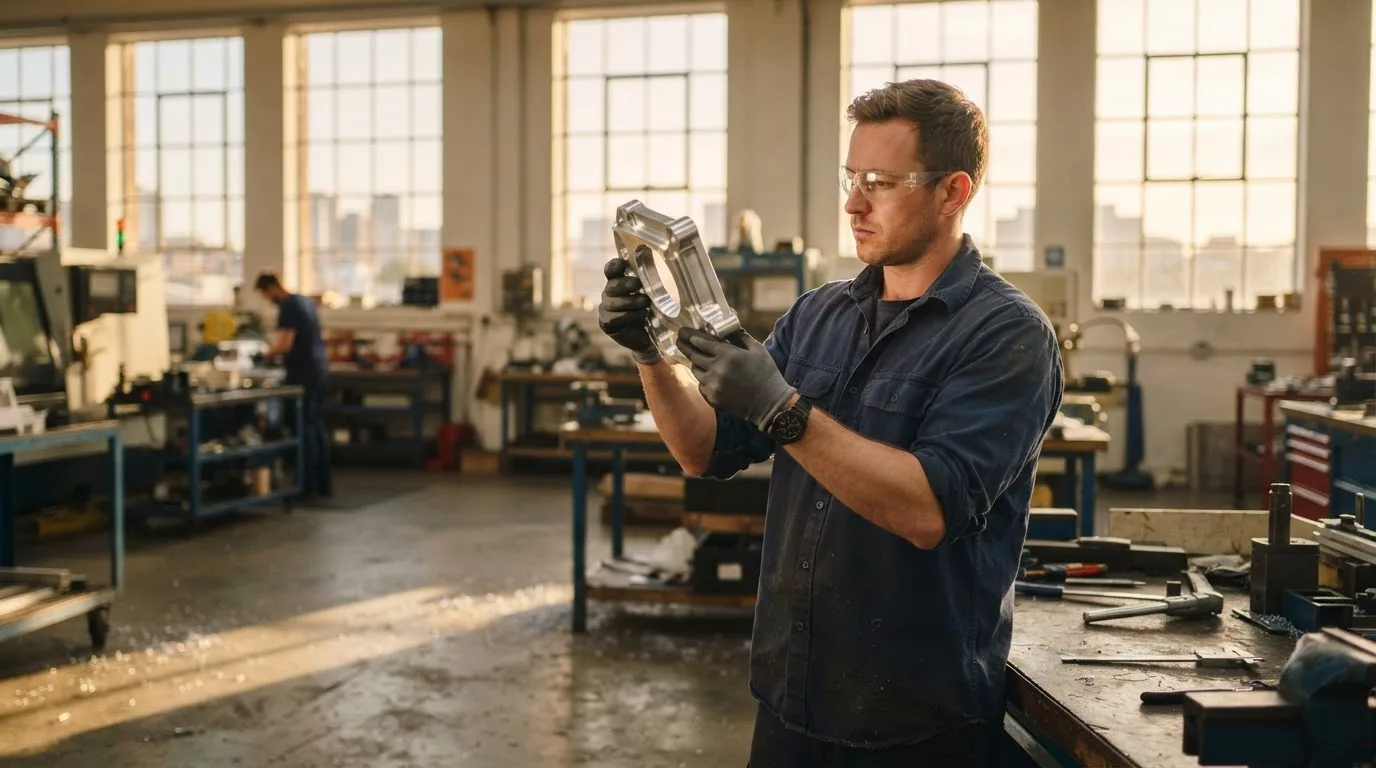
A machine builder in Brabant buys castings in Turkey, mills them here, builds them in and sells the finished machine to a customer in Norway. Import duty was paid when those castings arrived. The parts never reached the European market. That money is gone, and it did not have to be.
This is exactly the gap the processing procedures close. They exist because the legislator did not want a manufacturer inside the EU to be worse off than a competitor outside it who works the same raw material untaxed. Even so they are used sparingly, mostly because companies assume the administration is heavier than it is. The import duty you pay unnecessarily runs into tens of thousands of euro a year on any repeating flow.
There are two variants and they point in opposite directions.

What does inward processing actually involve?
Under inward processing you bring goods from outside the EU in without paying import duty or import VAT. The charge is suspended for as long as the goods sit under the procedure. Process them and export the result and no customs debt ever arose.
Processing is defined broadly: assembly, fitting, working into a different product, but also repair and even repacking. An importer who repairs returned devices from Asia here and ships them back to the owner uses the same procedure as a manufacturer turning raw material into a finished product.
What you need is an authorisation, applied for through the EU Trader Portal. Customs looks at your administrative organisation and internal control: can you show at any moment which imported goods sit in which finished product. On top of that you provide a guarantee for the duty at stake, much as you would for a customs warehouse.
What does the procedure demand administratively?
Three things, and the third is where it most often goes wrong.
- Stock records in which every batch under the procedure can be traced, from arrival through to discharge.
- A rate of yield: how much finished product comes out of how much raw material, including offcuts and rejects. You agree this with customs up front.
- Discharge within the period stated in your authorisation, supported by a bill of discharge accounting for what happened to everything.
That period is the crux. It is not endlessly extendable and it keeps running while your production waits on a supplier who does not deliver. Simply let it pass and a customs debt arises on the full value of the imported goods, and you then have that discussion after the fact, which is always the worse position to argue from than asking for an extension in advance.
And outward processing, what is that?
The exact reverse. You hold Union goods, you send them out of the EU temporarily to be processed or repaired, and you bring the result back. On return you pay import duty not on the full value of the product, but on the processing carried out outside the EU.
For capital goods that difference is enormous. A turbine part worth 180,000 euro overhauled in the United Kingdom for 22,000 euro comes back, when the procedure is applied correctly, with duty calculated on that 22,000, not on the 200,000 the customs value would otherwise be.
Here too an authorisation applies, and here too you do not simply send the goods away: there has to be an export declaration under the procedure, which fixes the identity of the goods. If customs cannot establish on return that these are the same goods, the relief falls away. Serial numbers, weights and photographs are not bureaucracy here, they are your evidence.
What if the goods stay in the EU after all?
That is allowed and it is not a breach. You release the processed products for free circulation and pay after all. What exactly you pay depends on your authorisation: in principle on the imported goods as they arrived, which works in your favour when the finished product falls in a more heavily taxed heading than the raw material did.
This also makes inward processing attractive to companies that do not yet know where the order will end up. You keep the option open without fronting the duty. If the consignment moves through the EU to another country after all, you work with a transit document rather than an import.
When is the authorisation not worth it?
On one-off consignments. The application, the guarantee and setting up the records do not weigh up against the benefit. For those cases there is the authorisation by declaration, where you request the procedure in the declaration itself. More limited, but you avoid the whole trajectory.
If the duty rate on your goods is zero there is also little to gain. A lot of electronics and a lot of machine parts already enter at zero percent. What remains is the VAT effect, and that is usually easier solved with a reverse charge. Applying for a processing authorisation on goods that are not taxed anyway is work for nothing.
We see the procedure pay off most clearly in three profiles: manufacturers with a steady supply from outside the EU, repair and overhaul businesses with return flows, and traders serving both EU and non-EU customers out of one central stock. If you hold an AEO authorisation, or work with a party that does, the guarantee often comes down as well.
Frequently asked questions
Q: What is the difference between inward and outward processing?
Ans: Under inward processing goods from outside the EU come in to be processed here and exported again, with duty suspended. Under outward processing Union goods leave the EU temporarily for processing and on return you pay only on the processing carried out abroad.
Q: Do I always need an authorisation?
Ans: For structural use yes, applied for through the EU Trader Portal. For one-off consignments you can use an authorisation by declaration, where the procedure is requested in the customs declaration itself. That version is narrower in scope and duration.
Q: What happens if I overrun the discharge period?
Ans: A customs debt arises on the goods that sat under the procedure, calculated on the full value, usually with interest. Ask for an extension before the period expires, because repairing it afterwards is considerably harder than flagging it in advance.
Q: Can repairs under warranty go through outward processing?
Ans: Repair falls within the procedure, and where the repair is carried out free of charge under warranty full relief can apply. The condition is that you can show the repair really was free of charge and that these are the same goods that were exported.
Q: Do I have to provide a guarantee, and how much?
Ans: Yes, for the duty potentially due on the goods sitting under the procedure at the same time. The amount therefore depends on your lead time and your stock volume, and can be reduced where an AEO authorisation is held.
Do you suspect you are paying import duty on goods that never reach the European market? We calculate what a processing authorisation would return on your flow, apply for it, set up the discharge and handle the customs declarations under the procedure. Before any of that we arrange the authorisation to act for you at customs.