
T1, T2, T2L and T2LF documents explained: transit rules in European logistics
Key Takeaways
- Customs transit allows goods to cross one or more national borders without duties or taxes being paid at every crossing.
- The legal framework is the Common Transit Convention (CTC), covering the 27 EU member states plus countries including the UK, Norway, Switzerland and Turkey.
- The T1 document is used for non-Union goods, for which EU customs duties have not yet been paid.
- The T2 document is used for Union goods travelling through a non-EU country within the CTC area to another EU destination.
- Using the wrong document, or failing to correctly close the transit procedure at the destination, can result in financial penalties and customs liability.
Goods crossing European borders are not always cleared in the first country they enter. A container arriving in Rotterdam and destined for Germany, for example, does not need to be fully cleared in the Netherlands.
Instead, the shipment travels under customs supervision to its final destination using a transit document. T1, T2, T2L and T2LF documents make this possible.
Each document is intended for a specific type of goods and a specific transit situation. Using the wrong document, or failing to correctly close a transit procedure at the destination, can lead to financial penalties and customs liability for the responsible party.
In this article we explain what each transit document means, when it is required, how the Common Transit Convention works, and what happens when goods are transported through the Netherlands under these procedures.
What is customs transit and why does it exist?
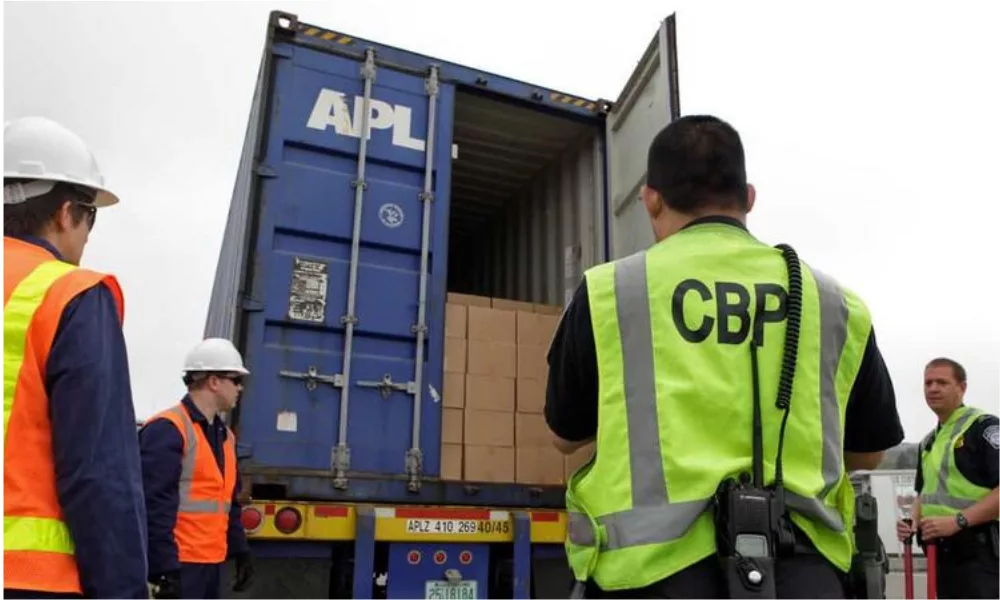
Customs transit is a procedure that allows goods to cross one or more national borders without customs duties or taxes having to be paid at every border crossing.
Customs duties are suspended during transport and only become payable once the goods reach their final destination and are officially cleared. This applies to all modes of transport, including road, sea, air and rail.
Without customs transit, every border crossing would require full customs clearance and payment of import duties. This would make cross-border logistics within Europe considerably slower and more expensive. Customs transit solves this problem by keeping goods under customs supervision for the entire journey.
The legal framework for this is the Common Transit Convention (CTC). This agreement covers all 27 EU member states plus the United Kingdom, Norway, Iceland, Liechtenstein, Switzerland, Turkey, North Macedonia, Serbia and Ukraine.
The four transit documents: T1, T2, T2L and T2LF
Which transit document is needed depends entirely on one question: what is the customs status of the goods?
Are they Union goods (Community goods), meaning they originate from the EU or the import duties have already been paid within the EU?
Or are they non-Union goods (non-Community goods), for which customs duties have not yet been paid within the EU?
The answer to this question determines which of the four transit documents must be used.
T1 document: external transit for non-EU goods
The T1 document is used for non-Union goods. These are goods that have not yet been released for free circulation in the EU and for which EU customs duties have not yet been paid.
With a T1 document, these goods can be transported under customs supervision through the EU and the CTC area without import duties having to be paid at every border crossing.
Customs duties are suspended during transport and only become payable once the goods reach their final destination and are cleared there.
A practical example is a shipment from China that arrives in Rotterdam and is then transported to Germany for final customs clearance. The T1 document covers the route from Rotterdam to Germany.
T2 document: internal transit for Union goods
The T2 document is used for Union goods. These are goods that originate from the EU or for which EU customs duties have already been paid and which have therefore acquired free-circulation status.
A T2 document is needed when these goods travel through a non-EU country within the CTC area on their way to another EU destination.
Without a T2 document, Union goods transported through a non-EU country can lose their Union status and become subject to import duties again upon re-entry into the EU.
A practical example is a French company transporting goods to Germany via Switzerland. The T2 document ensures the goods retain their EU status during transit through Switzerland.
T2L document: proof of Union status without customs guarantee
The T2L document is not a transit document in the same sense as a T1 or T2 document. No customs guarantee or financial security is attached to it.
It is a proof document used to demonstrate that goods are Union goods and are in free circulation.
The document is used when goods temporarily leave the customs territory of the EU without falling under the customs regulations of another country.
The most common example is sea transport between two EU ports via international waters.
Without a T2L document, goods transported by sea between EU member states may be treated as non-Union goods upon arrival.
T2LF document: variant for special fiscal territories
The T2LF document is a variant of the T2L document and is used when goods are transported between territories with a different fiscal regime within the customs territory of the EU.
Not all EU member states are part of the same fiscal territory, even though they are part of the same customs territory.
Examples include the Canary Islands and various French overseas territories.
The T2LF document confirms the Union status of goods transported between the regular customs territory of the EU and these special fiscal territories.
NCTS: how transit documents are submitted
All T1 and T2 transit declarations must be submitted electronically via the New Computerised Transit System (NCTS).
This is the pan-European digital system used by customs authorities in all CTC countries to process, monitor and track transit movements from departure to arrival. The current version is NCTS Phase 5.
When a transit declaration is submitted and accepted, a Movement Reference Number (MRN) is generated and a Transit Accompanying Document (TAD) is printed.
The TAD document must always travel with the goods for the entire transit.
In the Netherlands, transit notifications submitted via NCTS are also linked to Portbase, the Port Community System for Rotterdam and Amsterdam.
As a result, all parties involved in the logistics chain receive real-time status updates and have access to the same up-to-date information.
How do you open and close a transit procedure?
Opening a transit procedure requires a customs broker or freight forwarder to submit the transit declaration via NCTS with all required information. When all information is complete and correct, this process usually takes about 60 minutes.
Opening the procedure, however, is only half the job. The transit procedure must also be officially closed at the destination. If this does not happen, the declarant becomes financially liable for the suspended import duties and taxes.
What do you need to open a transit declaration?
- Commercial invoice and packing list
- Transport document, such as a bill of lading, CMR consignment note or air waybill
- Commodity codes and HS codes for all goods in the shipment
- EORI numbers of both the sender and the consignee
- Customs office of departure and customs office of destination
- Reference of the financial security covering any import duties and taxes
- Details on the mode of transport and identification of the vehicle or container
How is a transit procedure closed?
- The goods arrive at the customs office of destination with the TAD document and undamaged customs seals
- The customs office of destination checks the goods against the TAD and reports the arrival via an IE044 message in NCTS
- NCTS formally closes the procedure and releases the financial security
- The declarant receives confirmation that the transit procedure has ended
- When the goods do not arrive within the validity period, NCTS sends an IE055 discrepancy notification and initiates an inquiry
- If the declarant cannot provide proof of correct closure within the set deadline, a C18 payment request is issued for all suspended import duties and VAT
The financial security: what is it and why is it important?
A financial security is mandatory for every T1 and T2 transit procedure. This security covers the import duties and taxes that would be owed if the goods do not reach their destination under customs supervision.
The amount of the security is based on the estimated import charges in the country of destination. A security can be used for a single shipment or a comprehensive guarantee that covers multiple transit movements simultaneously.
The security is provided by the declarant, usually a customs broker or freight forwarder. This means the declarant is financially liable when a transit procedure is not closed correctly and on time.
If the procedure is not closed within the validity period, customs will call on the security and issue a payment request for all suspended import duties and taxes.
When are T1 and T2 documents needed in the Netherlands?

The Netherlands is one of Europe’s most important transit countries. Rotterdam is the largest port in Europe and a key gateway for goods transported to destinations throughout Europe.
T1 and T2 transit procedures are therefore a daily part of the work of importers, exporters and logistics providers using Dutch ports and borders.
Non-EU goods entering via Rotterdam for clearance elsewhere
Goods from China, the United States or other non-EU countries that arrive in Rotterdam but ultimately need to be cleared in Germany, Belgium or another EU member state are transported under a T1 document from Rotterdam to the customs office of destination.
EU goods travelling via the United Kingdom
Since Brexit, EU goods transported via the United Kingdom to another EU destination need a T2 document to retain their status as Union goods.
Goods transported via Switzerland or Norway
Dutch exporters transporting goods via Switzerland or Norway use a T2 document to prevent third-country import duties from becoming payable at the border.
Sea transport between EU ports via international waters
Dutch exporters transporting goods by sea between Rotterdam and another EU port use a T2L document as proof that the goods still have Union goods status upon arrival.
Goods in transit through the Netherlands from non-EU countries
Goods arriving from outside the EU and transported through the Netherlands to another country travel under a T1 document, with the Netherlands acting as the transit country.
Expert support for transit documents in the Netherlands
T1 and T2 transit procedures require accurate documentation, correct HS codes, valid financial securities and timely closure at the customs office of destination.
A single error in the transit declaration, such as an incorrect commodity code, wrong consignee details or a missed closing deadline, can lead to customs liability for the full amount of the suspended import duties.
For companies importing and exporting via Rotterdam and Amsterdam, working with an experienced customs partner ensures that transit procedures are always opened, monitored and closed correctly.
The Customs Company is an AEO-certified customs service provider in the Netherlands with direct connections to Dutch Customs and Portbase.
With 24/7 support for all transit declarations, including T1 and T2 procedures, The Customs Company ensures that your transit shipments comply with all customs requirements from start to finish.
Thanks to its AEO status, simplified transit procedures can also be applied, reducing administrative burdens and speeding up customs processing at Dutch ports.
Frequently asked questions
Q: What is the difference between a T1 and a T2 document?
Ans: A T1 document is used for non-EU goods that have not yet been cleared within the EU. Import duties are suspended during transport. A T2 document is used for Union goods travelling through a non-EU country, such as Switzerland or the United Kingdom, while their EU customs status is retained.
Q: What happens if a T1 or T2 transit procedure is not closed on time?
Ans: Customs sends a discrepancy notification and starts an investigation. If the declarant cannot prove that the goods arrived correctly, the financial security is called upon and a payment request follows for all suspended import duties and VAT.
Q: What is a T2L document and when is it needed?
Ans: A T2L document proves that goods have Union goods status and are in free circulation. It is used when goods temporarily leave the customs territory of the EU without entering another country, for example during sea transport via international waters between two EU ports. No financial security is required for a T2L document.