Importing from the UK to the EU: customs, origin and VAT
Key takeaways
- Since Brexit, goods coming from Great Britain enter the EU from a third country. Every consignment needs an EU import declaration, even when no duty is due.
- Zero duty only applies to goods with UK preferential origin, backed by a statement on origin from the UK exporter or by importer’s knowledge.
- Above 6,000 euros per consignment, the statement must carry the UK exporter’s EORI number. Without it, the preference claim fails.
- Goods shipped from a British warehouse but made in China or Vietnam pay the normal EU rate.
- When the goods are cleared in the Netherlands, 21 percent import VAT is due, unless an Article 23 licence moves it to your VAT return.
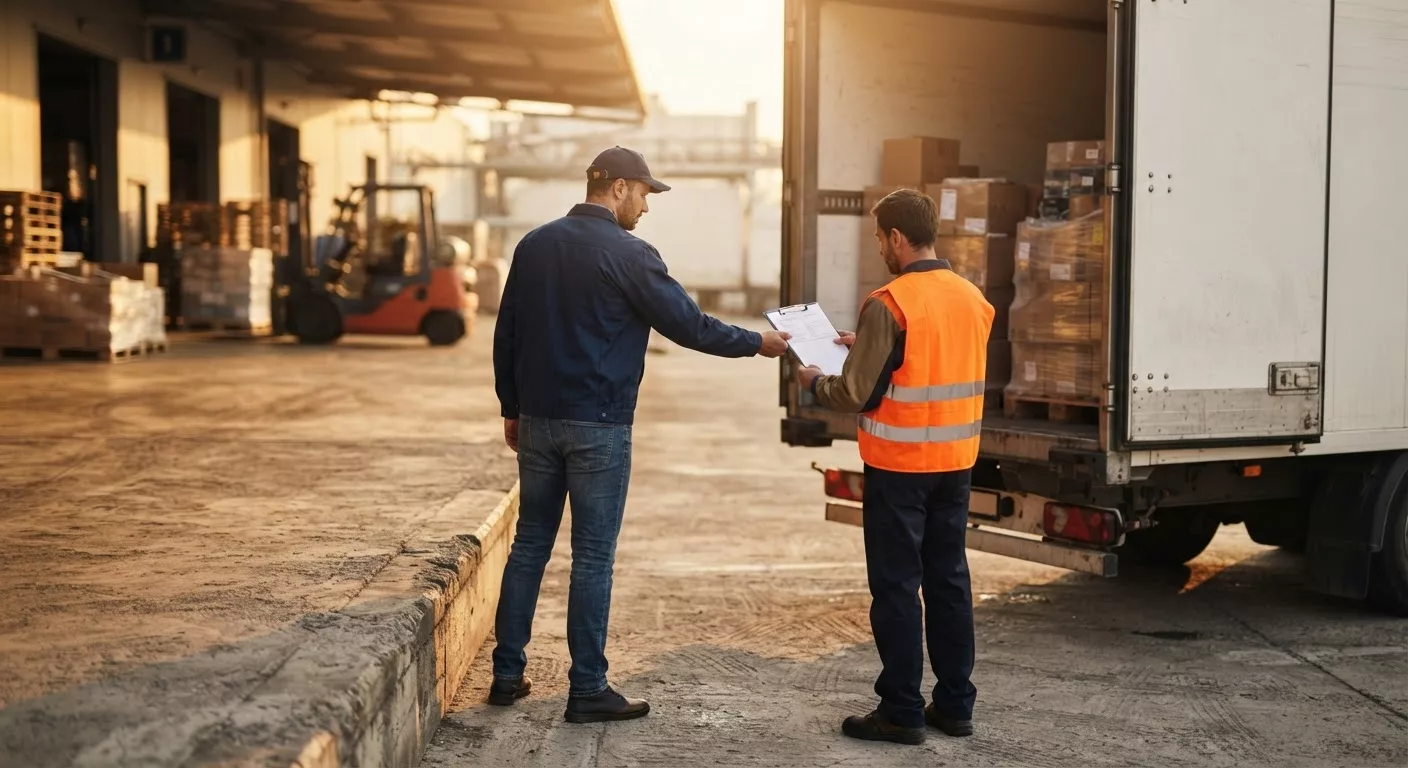
A Dutch garden centre chain orders a full trailer of outdoor furniture from a supplier in Leeds. The goods reach Hook of Holland on time, then sit at the terminal for a day: nobody had lodged the import declaration, and the invoice said nothing about origin. When the paperwork finally goes through, the importer pays duty that should never have been charged.
This happens on both sides of the deal. EU buyers assume the British seller handles customs, and British sellers assume the buyer does. The rules are not complicated, but someone has to own each step before the truck leaves.
This guide is for EU businesses buying from the UK and for UK sellers shipping into the EU. It covers the import declaration, the origin rules, import VAT and the extra checks on food and plants.
What customs formalities apply when importing from the UK?
An EU import declaration and advance notice of the consignment. The UK left the EU customs union on 1 January 2021, so British goods are treated like goods from any other country outside the EU.
- The importer needs an EU EORI number. The declaration cannot be lodged in the importer’s name without one.
- The import declaration releases the goods for free circulation. Our guide to the import declaration walks through each step.
- The carrier files an entry summary declaration (ENS) before the goods arrive.
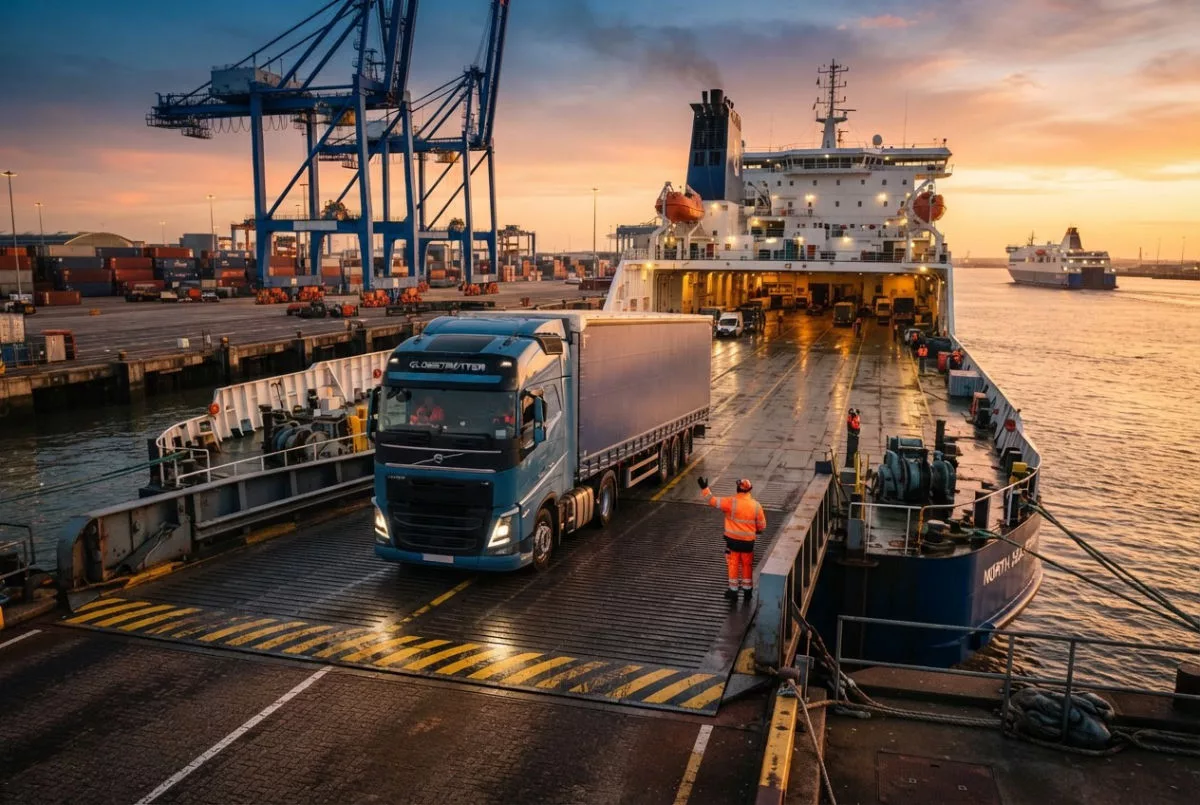
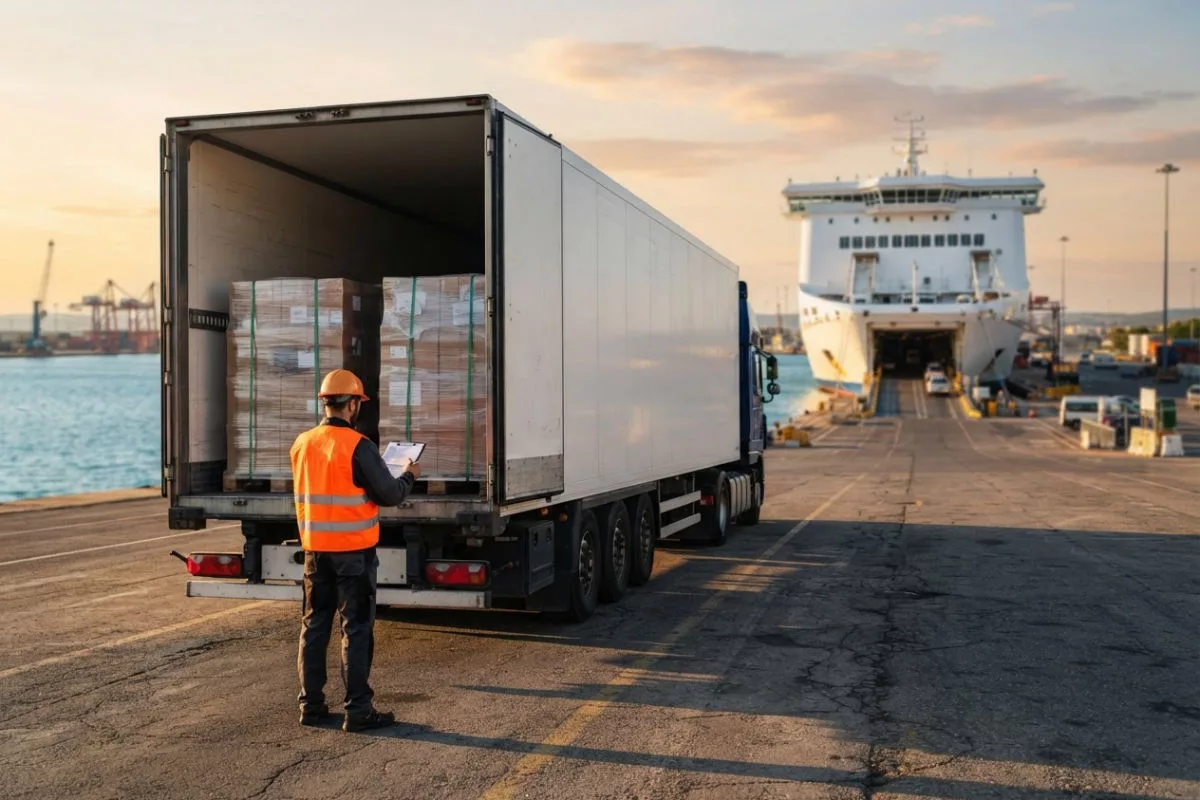
- At Dutch ferry terminals, the customs documents have to be pre-notified in Portbase, or the trailer is not allowed off the terminal.
On the British side, the seller makes a UK export declaration. That is the seller’s job. What the EU importer needs from the seller is an invoice customs can work with: a clear description of the goods, the value, the Incoterm and, ideally, the statement on origin.
Do you pay import duty on goods from the UK?
Not if the goods have UK preferential origin and you can prove it. Under the EU and UK Trade and Cooperation Agreement, those goods enter at zero duty. Goods that come from the UK but do not meet the origin rules pay the standard EU rate for their commodity code.
Wholesalers are where this usually goes wrong. A British distributor holding stock of Vietnamese trainers or Chinese electronics is selling you goods of non-UK origin. Loading a pallet in Birmingham does not make its contents British. Only goods wholly obtained in the UK, or processed there enough to meet the product-specific rules, qualify.
With a new supplier, ask about the origin of each product line, not where it ships from. To see what the difference means in euros, run the numbers in our customs calculator.
How does a UK supplier prove origin?
With a statement on origin on the invoice or another commercial document. Guidance from HMRC on proving originating status under the agreement sets out the rules:
- The exporter makes out the statement, so this is the UK supplier’s task.
- For consignments worth more than 6,000 euros it must include the exporter’s reference number. For a UK exporter that is the GB EORI number; for an EU exporter it is the REX number.
- One statement can cover repeat shipments of identical products for up to 12 months.
- The alternative is importer’s knowledge: the importer holds the information that shows origin and must be able to produce it if customs asks.
A missing statement at import is not the end of it. The same HMRC guidance explains that preference can be claimed after importation, within three years, with a valid proof of origin, and the duty paid is then refunded. For the different proofs of origin and when each applies, see our article on the certificate of origin.
How much does a valid statement on origin save?
A worked example with our own assumptions. A shipment has a customs value of 20,000 euros, the EU duty rate for its commodity code is 4 percent, and the goods are of UK origin. The goods are cleared in the Netherlands.
- With a valid statement, including the GB EORI number because the value is above 6,000 euros: no duty. Import VAT at 21 percent on 20,000 euros comes to 4,200 euros.
- Without a valid statement: 800 euros of duty, and VAT is then charged on 20,800 euros, so 4,368 euros.
That is 968 euros more on one shipment. The VAT part can normally be reclaimed or deferred; the 800 euros of duty is a real cost. The 4 percent rate is only an example, the actual rate depends on the commodity code.
How is import VAT handled for goods from the UK?

Clearing in the Netherlands means 21 percent import VAT, or 9 percent for goods in the reduced band, calculated on the customs value plus the duty. Without a licence, that VAT is paid at import and recovered later through the VAT return.
An Article 23 licence lets you report the import VAT in your periodic return and deduct it in the same return, so no cash is tied up between import and refund. For regular buyers from the UK this is usually the biggest saving. Our article on the Article 23 licence explains who qualifies.
UK sellers shipping small parcels to EU consumers face a newer change. German customs explains that Council Regulation (EU) 2026/382 removed the duty exemption for consignments up to 150 euros from 1 July 2026. Distance sales under IOSS or by post now carry a flat duty of 3 euros per category of goods, and since 1 November 2026 an EU handling fee of 2 euros per category is added on top. Build both into your EU prices.
What extra rules apply to food, plants and animal products?
These goods face EU sanitary and phytosanitary checks on top of the customs declaration. They enter through a border control post, where the Dutch food and product safety authority NVWA checks the documents and sometimes the load.
- Products of animal origin, such as meat, dairy and fish, need a UK health certificate and advance notification.
- Plants and many plant products need a phytosanitary certificate.
- Some foods have extra labelling or composition requirements.
Check the requirements for your product with the NVWA before each new product line. Shipments from Northern Ireland follow different rules from those for England, Scotland and Wales. If you also sell into Britain, the opposite direction is covered in our guide to exporting to the UK from the EU.
Frequently asked questions
Q: Is there import duty on goods from England?
Ans: Only when the goods lack UK preferential origin, or when origin has not been proven. British products with a valid statement on origin enter at zero duty. Import VAT is due either way, even when the duty is zero.
Q: What should a UK supplier’s invoice show?
Ans: A clear description of the goods, the value, the Incoterm and the details of seller and buyer. For zero duty it also needs the statement on origin, with the supplier’s GB EORI number once the consignment is worth more than 6,000 euros.
Q: Who files the import declaration for goods from the UK?
Ans: Usually the EU importer, or a customs broker acting for them. If the UK seller delivers DDP, the seller carries the import obligations and needs a representative in the EU. Agree this before the first order, or the goods will wait at the border.
Q: Can I get duty back if the statement on origin was missing?
Ans: Yes, as long as the goods really are of UK origin. Preference can be claimed retrospectively, within three years of import, with a valid proof of origin. Ask the supplier for the statement and have the claim filed.
Q: How long does clearance take for a shipment from the UK?
Ans: With complete documents and timely pre-notification, the import declaration is done within hours. Delays usually come from a missing Portbase notification, a vague description of the goods or a check on food products.
Importing from the UK and want the declaration, the origin claim and the VAT right first time? We file import declarations as an AEO-certified customs broker, check the statement on origin on your supplier’s invoice before the goods arrive, assist with physical inspections and are reachable at weekends and at night. Our customs services page shows what we take off your hands, and a signed authorisation is all we need to clear your first shipment from the UK.
Written by Bob Endeveld, owner of The Customs Company